
In 2026, the AI landscape is saturated with advanced models, but deciding between ChatGPT 5.2, Claude Opus 4.5, and Gemini 3 isn’t about chasing the “smartest” label or ranking benchmark scores. The real question is: Which AI delivers tangible, workflow-oriented wins? Benchmarks rarely capture real-world utility. What matters is how an AI integrates with your workflow, solves your unique challenges, and generates usable outputs with minimal friction. Below, we break down each model’s capabilities, ideal use cases, and limitations to help you make informed decisions.
The “Simple Wins” Approach: Stop Chasing “Best”—Focus on Practical Utility
Most users test AI models with clever prompts or are drawn to flashy demos, only to revert to their default tools. A more effective strategy is to focus on simple wins—tasks that are:
- Small and repeatable
- Obvious in success/failure
- Compatible with existing tools (Excel, PowerPoint, internal docs, etc.)
AI models aren’t hierarchical ladders of intelligence—they are specialized tools with unique shapes of competence. Choosing the right model depends on your main work pain point:
| Pain Point | Description |
|---|---|
| Bandwidth overload | Too much information to read, not enough time to synthesize. |
| Artifact execution | Converting ideas into structured, business-ready deliverables (spreadsheets, presentations, documents). |
| Human ambiguity | Managing messy organizational dynamics, tone, and persuasive communication. |
Here’s how ChatGPT 5.2, Claude Opus 4.5, and Gemini 3 perform against these challenges.
Gemini 3: Bandwidth Engine for Massive Data Synthesis
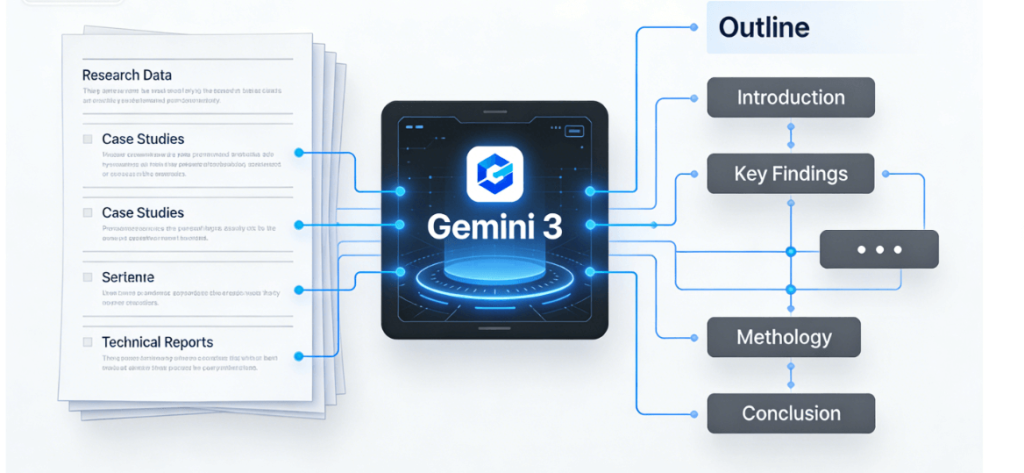
If your main challenge is managing large volumes of unstructured data—long reports, meeting transcripts, screenshots, or research packets—Gemini 3 excels. Google’s flagship AI is built around a million-token context window, which ensures no data is lost during processing.
Core Strengths:
- Massive input handling: Ingests and synthesizes huge amounts of content into actionable insights. Key questions it answers:
“What is being claimed? Where are the contradictions? What information is missing?” - Clarity from chaos: Transforms information overload into readable outlines or summaries—ideal for research synthesis, board prep, or mapping complex problem spaces.
Limitation:
- Downstream friction: Outputs may not integrate seamlessly with Microsoft Office (Excel, PowerPoint). Converting Gemini’s analyses into team-ready formats can incur extra effort.
Example “Simple Win” Task:
Input: 50-page client report + 3 hours of meeting transcripts Task: “Create an outline highlighting key client demands, contradictions in feedback, and three priority questions to address before our next meeting.”
ChatGPT 5.2: Artifact Execution Engine for Business Deliverables
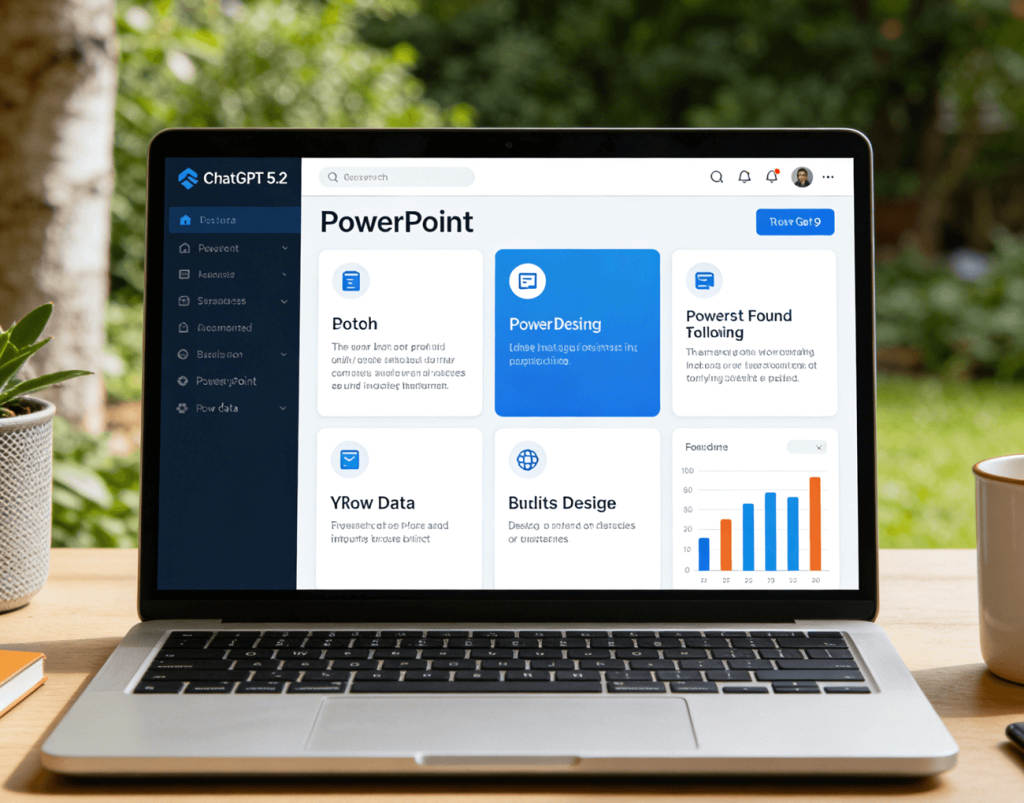
ChatGPT 5.2 is designed to produce polished, structured outputs rather than just chatting. It excels in creating business-ready artifacts with minimal manual effort.
Core Strengths:
- Structured deliverables: Generates spreadsheets, tables, presentations, and executive briefs that appear as though a junior analyst spent hours on them.
- Workflow-friendly: Supports large files, mixed media inputs (text, documents, images), and integrates smoothly with tools teams already use.
- Reliable instruction-following: Handles multi-step tasks, computation, and synthesis without losing coherence.
Limitation:
- Premature coherence: With messy or contradictory inputs, it may generate a plausible but inaccurate narrative. Treat it like a junior analyst—provide clear instructions and highlight contradictions.
Example “Simple Win” Task:
Input: Sales dataset + analysis brief Task: “Analyze Q3 revenue trends, identify top 3 growth drivers, and produce a 5-slide PowerPoint with charts and actionable recommendations.”
Claude Opus 4.5: Persuasion & Coding Powerhouse
Claude Opus 4.5 shines in persuasive business writing and technical/coding tasks, thanks to Anthropic’s advanced “harness” for tool use, feedback loops, and safety guardrails.
Core Strengths:
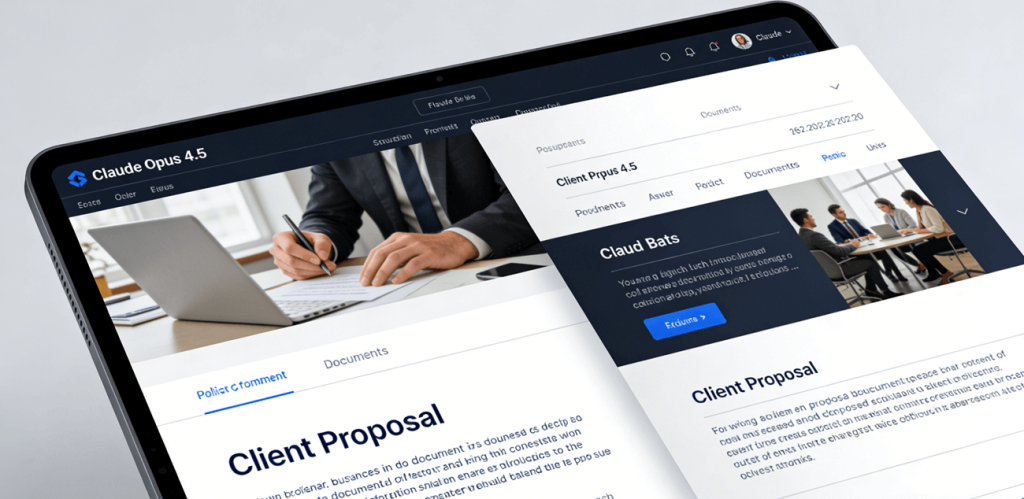
- Persuasive, polished artifacts: Produces high-quality executive memos, client proposals, and decks that feel human-crafted. Excels at tone, organizational nuance, and political sensitivity.
- Coding & tool mastery: Supports clean code generation, pull requests, tests, and refactors. Works seamlessly with markdown and developer toolchains.
- Instruction precision: Converts focused input into finished, production-ready outputs reliably.
Limitation:
- Context window constraints: Struggles with extremely large inputs. Works best with focused, sliceable tasks.
Example “Simple Win” Tasks:
- Writing: “Draft a persuasive email to stakeholders advocating for a new product launch. Address objections regarding cost and timeline. Keep it concise, data-backed, and aligned with brand voice.”
- Coding: “Write Python code to automate invoice processing, integrate with Xero, and generate a monthly summary report. Include error handling and comments for team modification.”
2026 AI Adoption Strategy: Route Work to the Right Tool
The smartest approach isn’t choosing a single “best” AI—it’s designing a system that routes work according to model strengths:
- Identify your primary pain point: Bandwidth, artifact creation, or persuasion/coding?
- Test simple wins: Start with small, measurable tasks and observe which model delivers results with minimal friction.
- Log and iterate: Track successes and failures—models evolve rapidly, so maintain flexibility.
| Model | Strength | Best Use Case |
|---|---|---|
| Gemini 3 | Massive data synthesis | Research reports, long transcripts, large datasets |
| ChatGPT 5.2 | Structured deliverables | Spreadsheets, presentations, executive briefs |
| Claude Opus 4.5 | Persuasion & coding | Executive communications, proposals, coding automation |
Gemini 3 integrates tightly with Google’s ecosystem, ChatGPT 5.2 dominates structured business output, and Claude Opus 4.5 excels in persuasion and technical workflows. None is perfect, but each provides unique value when matched to its optimal workflow.
Key Takeaway: Forget benchmarks—focus on what moves the needle for your work. In 2026, top AI users prioritize utility over perceived intelligence, applying the right model for each task.